Nobody is debating whether marketing teams should use AI any more. ON24’s latest report, The State of AI in B2B Marketing in 2026, found that 82% of B2B marketers already use it, and another 11% plan to. In businesses turning over more than $25 million, the figure is 96%.
So adoption isn’t the story. The interesting bit is the gap opening up between the teams using AI properly and everyone else.
The leaders are pulling away
ON24 split its respondents by how their business performed against its top goal last year. Among the top performers, 56% use AI significantly. Among everyone else, it’s 26%. Most of that second group sits in “somewhat or limited” use.
The productivity gap is wider again. Three quarters of significant AI users say AI has made them much more productive. Among partial users, it’s 23%.
And the leaders aren’t slowing down. 96% of significant users plan to add more AI this year, compared with 73% of partial users. 89% of them are using or planning AI agents, against 63% of partial users and 29% of non-users.
ON24 accepts that other factors may play a part in business performance, and that’s fair. Strong businesses may simply be better at adopting new things. But I’d put money on the gap getting wider, not narrower. Teams that have already built repeatable AI workflows can test and improve them while everyone else is still proving the basics.
Everyone sees the potential. Few are using it.
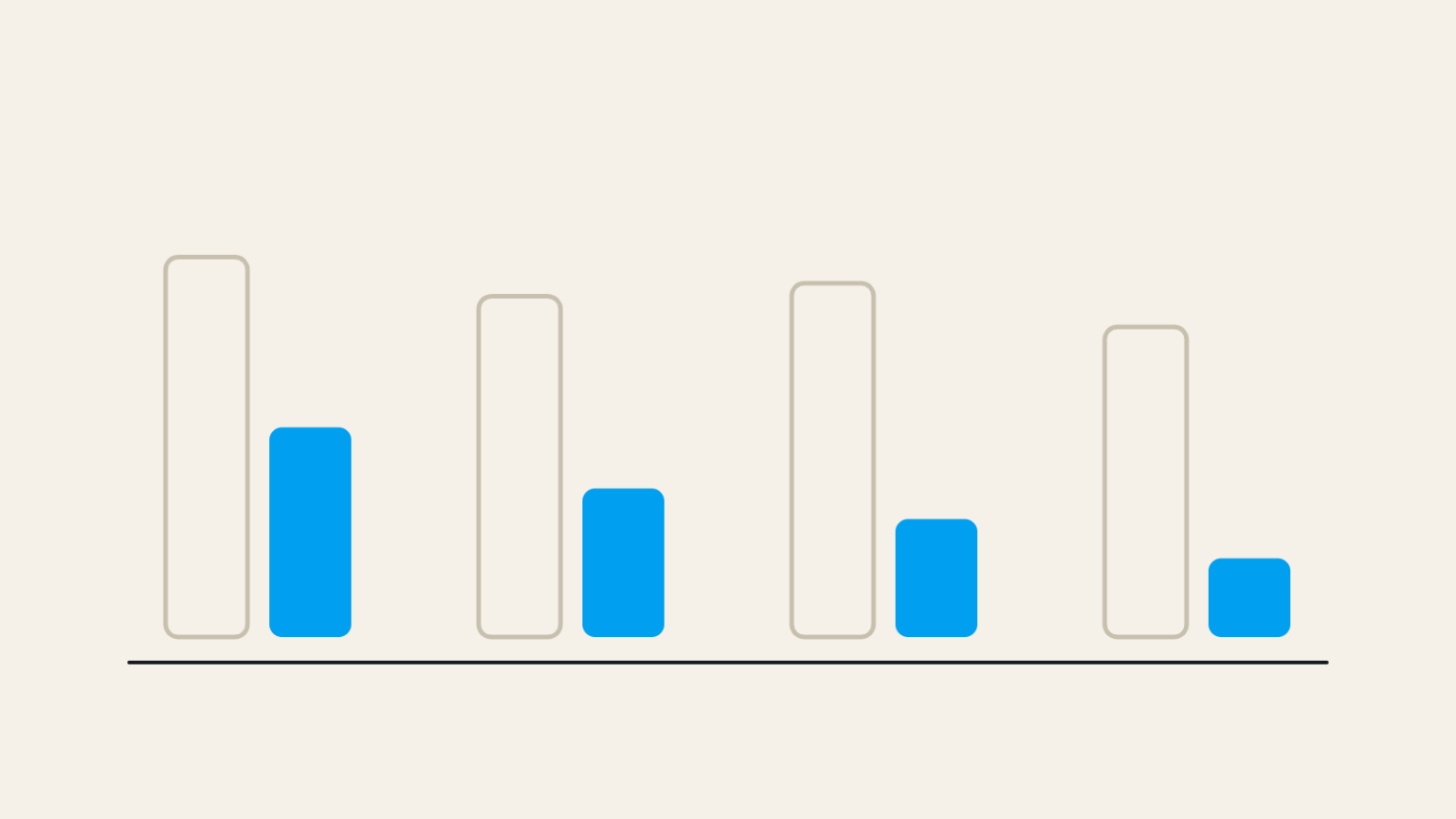
The most useful chart in the report compares where marketers think AI could make a difference with where they’re actually using it. Practice trails belief in every single activity measured:
- Analytics and measurement: 87% see the potential, 48% use it
- Audience segmentation and personalisation: 78% against 34%
- Translation: 81% against 27%
- Webinars and virtual events: 71% against 18%
Translation is the one that surprises me. It’s one of the most mature, lowest-risk uses of AI there is, yet only around a third of the marketers who see its value are using it.
That matches what we see. Most teams have got as far as drafting copy in a chat tool. The bigger wins in analytics, personalisation and follow-up need AI built into the actual workflow, and that’s harder.
The data problem nobody wants to talk about
Personalisation is where AI should shine in B2B, and it’s where the foundations are weakest. ON24 found that no single type of first-party data is used for personalisation by more than half of marketers. Named accounts top the list at 45%. Contact-level engagement history is at 30%, and buyer journey stage at 29%.
If you’re not using that data now, AI won’t magically make it useful. It’ll personalise faster on the wrong information, or produce more generic content at greater volume. Nobody needs more of that.
Workload is the real driver
The top challenge marketers named was workload, at 42%, up from 29% in 2024. A lack of budget and resources came second at 37%. Teams are being asked to do more with less, and AI looks like the obvious answer.
It can be, if it’s pointed at the right work. BCG research cited in the report found that companies getting real value from AI focus on an average of 3.5 use cases, against 6.1 for everyone else, and expect more than twice the return. Doing a few things properly beats doing everything a bit.
What we recommend
We agree with most of what ON24 concludes. Access to AI isn’t what separates the leaders any more. Discipline is. Here’s what we’d tell any B2B marketing leader to do next.
- Pick three workflows, not thirty. Choose the places where slow, manual or inconsistent work is clearly costing you, such as event follow-up, content reuse or sales handoff. Park everything else for now.
- Measure before you change anything. Write down how long it takes today, where it gets stuck and what it converts at. Without a baseline you’ll never prove AI made a difference.
- Fix the process, then automate it. AI on top of a messy workflow just makes the mess faster. Take out the unnecessary steps and duplicate approvals first.
- Get your first-party data in order. Agree what you capture, what it means and where it goes. That’s the unglamorous work that makes personalisation possible.
- Put AI inside your systems, not beside them. A chat tool is fine for ideas and first drafts. Anything touching customer data, personalisation or sales follow-up belongs in your CRM or marketing automation, with a human review point.
- Measure outcomes, not output. More content isn’t the goal. Faster follow-up, better conversion and more pipeline are. If a use case only produces more stuff, stop it.
“We use ChatGPT” isn’t an AI strategy. “Every event follow-up is personalised to what the attendee actually did, and goes out within the hour” is.
Where we’d differ
Mostly on emphasis. ON24 surveyed 261 B2B marketers in the US, and it sells a webinar platform, so it’s no surprise webinars feature heavily. They’re a good place to start because buyer behaviour is easy to see there, but they’re one option among several. For most UK businesses the same thinking applies to client reviews, renewal conversations and sales calls: anywhere you already capture what customers care about but don’t yet use it.
If your team is using AI but you’re not sure it’s adding up to anything, ping me a message, or let’s grab a coffee.
Where is your team right now: dabbling, or doing it properly?
Sources: ON24 (a Cvent company), The State of AI in B2B Marketing in 2026. Online survey of 261 US B2B marketers, April 2026, via a Centiment panel. BCG figures as cited in the ON24 report. Recommendations are Deliver better’s own.